

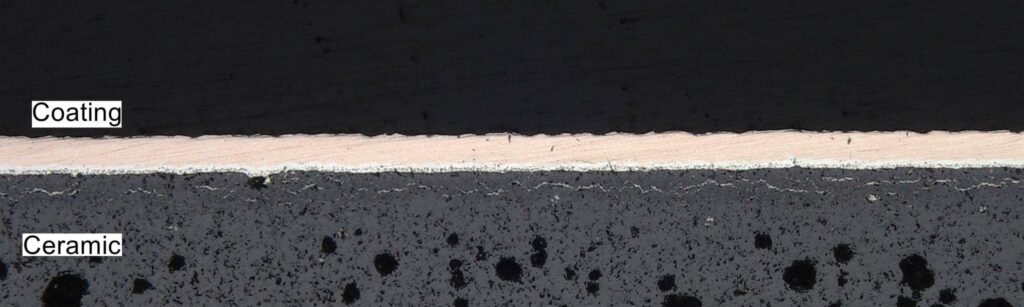
Brazing remains a relevant technology today for the manufacture of technical components intended for the most demanding industries. Unlike welding, it allows for the permanent joining of multiple materials without melting the parts to be joined. Only the filler metal is melted, ensuring excellent dimensional accuracy, minimal component deformation, and high mechanical performance. This technology is particularly well-suited for joining materials such as aluminum, copper, stainless steel, titanium, superalloys, and certain ceramics.
With several decades of experience, the AML Group has expertise across the entire brazing value chain: feasibility studies, design support, tooling development, manufacturing, thermal cycles, metallurgical characterization, mechanical testing, qualification, and project management. This comprehensive approach enables the group to support both development phases and mass production for the aerospace, defense, energy, and precision manufacturing sectors.
Salt Bath Brazing: The leading reference for Aluminum Joints
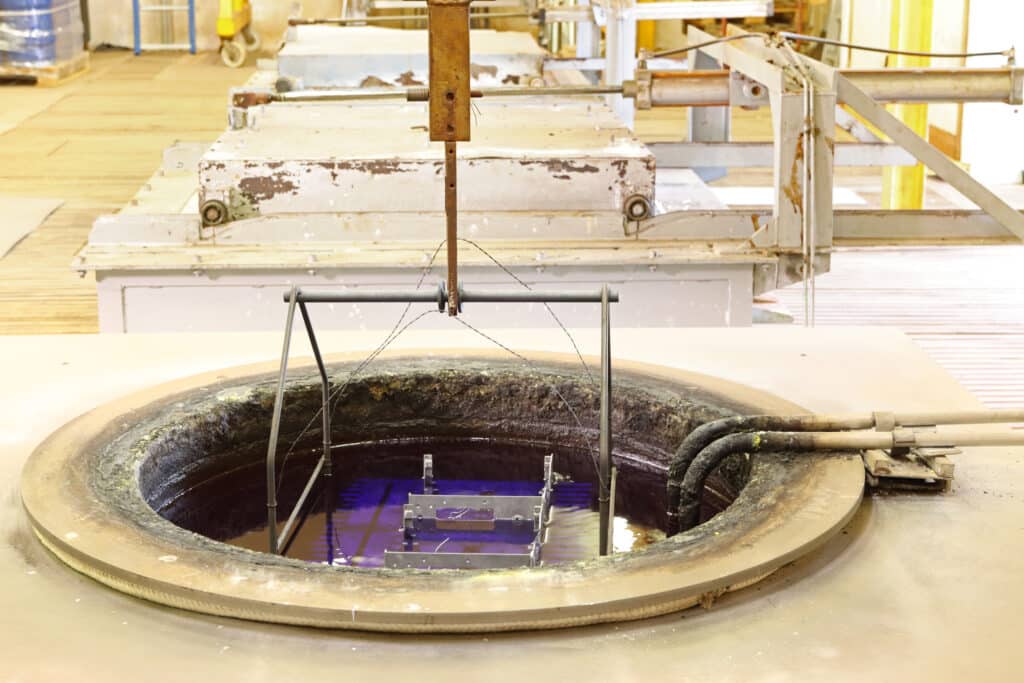
Salt bath brazing involves immersing pre-assembled parts in a bath of molten salt heated to a high temperature (over 500°C). This bath ensures both an extremely uniform temperature rise and effective protection against oxidation. The filler metal then melts and naturally penetrates the assembly gaps through capillary action before solidifying as it cools.
The main benefits
- Perfectly uniform heating, even on complex geometries
- Very low component deformation
- Excellent repeatability of manufacturing cycles
- Process qualified for aerospace applications
- Ability to joint a large number of components simultaneously
- Minimal tooling required
Application examples
This technology is particularly used for the manufacture of :
- Complex aircraft frames
- Cooled electronic enclosures
- Cold plates
- Radar structures
- Microwave waveguides
Vaccum brazing : the solution for critical applications
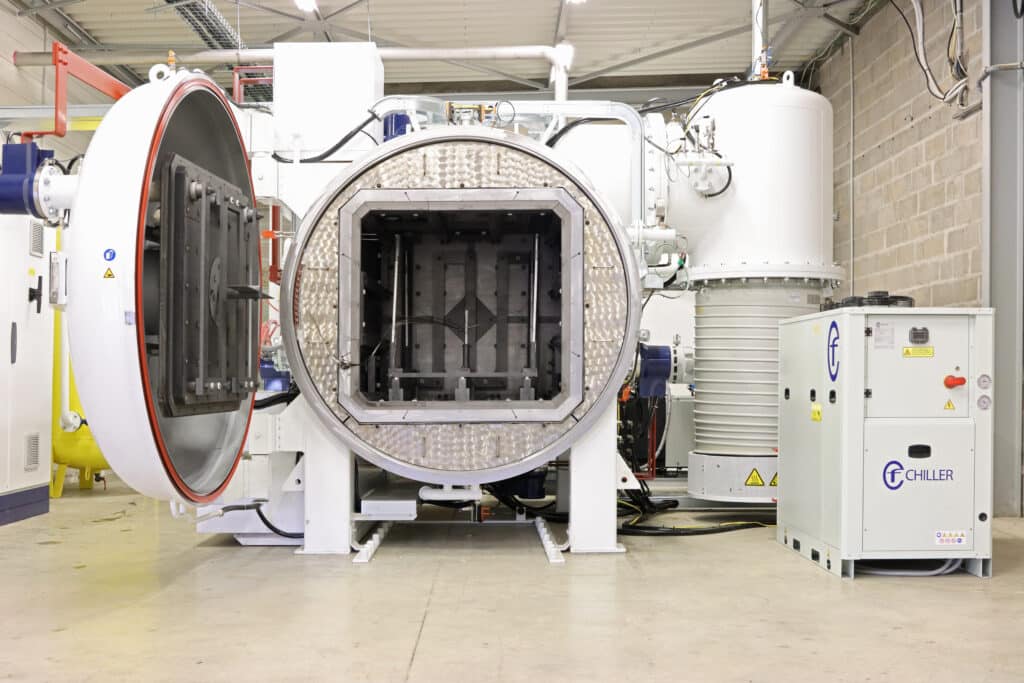
The assemblies are brazed in a vacuum furnace (10-6 mbar) at temperatures up to 1300 °C, eliminating any risk of oxidation during the thermal cycle. This process produces extremely clean, uniform joints that are perfectly suited for harsh environments. Note that the furnace has a capacity of 1200 mm × 800 mm × 800 mm. The maximum load is 800 kg.
Main benefits
- Complete absence of brazing flux
- Very high metallurgical purity
- Excellent mechanical properties
- Compatible with many materials: steels, titanium, copper, Inconel, ceramics
- Ideal for multi-material assemblies
- Very low surface contamination
- Excellent process repeatability
Application examples
Vacuum brazing is particularly well-suited for the manufacture of:
- Cold plates / heat exchangers
- Passive RF components
- Ceramic-metal antennas
- Components for cutting-edge sectors: aerospace, aviation, defense, medical, energy, etc.
Our projects include, among others, structures for fighter jets, space launch vehicles, satellites, and more…
Induction Brazing: Speed and Precision
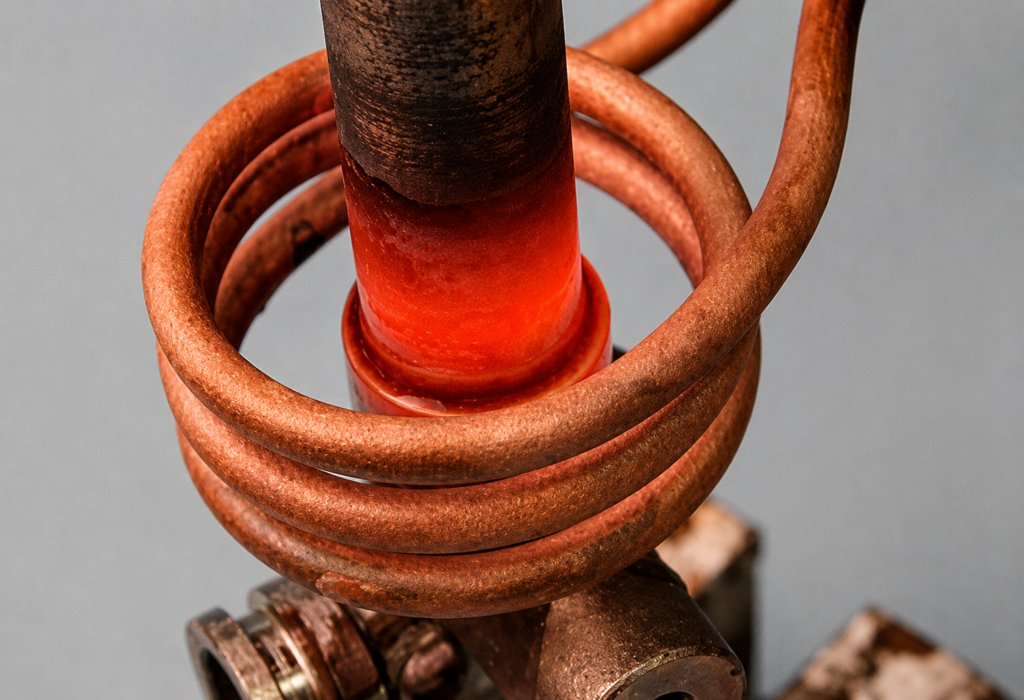
Induction brazing uses an electromagnetic field to heat the joint area locally. The process therefore requires that the materials be electrically conductive. Unlike vacuum and salt bath brazing, only the part to be brazed is heated, which significantly reduces thermal stresses on the rest of the part.
Main benefits
- Extremely rapid heating
- Very high precision
- Localized heating that minimizes distortion
- Space-qualified process
Application examples
Induction brazing is particularly used for:
- Hydraulic fittings
- Integration of electronic components
- Sensors / Antennas
- Waveguides
Much More Than Just Brazing
At AML, brazing is a key technological component integrated into a comprehensive industrial offering. We support our customers starting from the design phase to optimize geometries, select materials, define brazing clearances, and design the appropriate tooling. The assemblies are then validated through metallographic analyses, mechanical testing, high-frequency testing if necessary, and a comprehensive qualification process ensuring compliance with the requirements of the most heavily regulated sectors.
This comprehensive expertise now enables the AML Group to participate in major programs in the defense, aerospace, and space sectors, offering the most suitable brazing process for each project based on technical, economic, and industrial constraints.
About AML Innovation
AML Innovation is an industrial platform specializing in multi-material brazing technologies and the post-processing of high-performance parts using an innovative coating: LiCS Coating®. A subsidiary of the AML Microtechnique Lorraine Group, AML Innovation develops and industrializes high-value-added solutions for the most demanding applications in the aerospace, defense, luxury, and high-tech industries. From feasibility studies to qualification, we support projects from development through mass production.
link for AML Microtechnique Lorraine : https://aml-microtechnique.com