
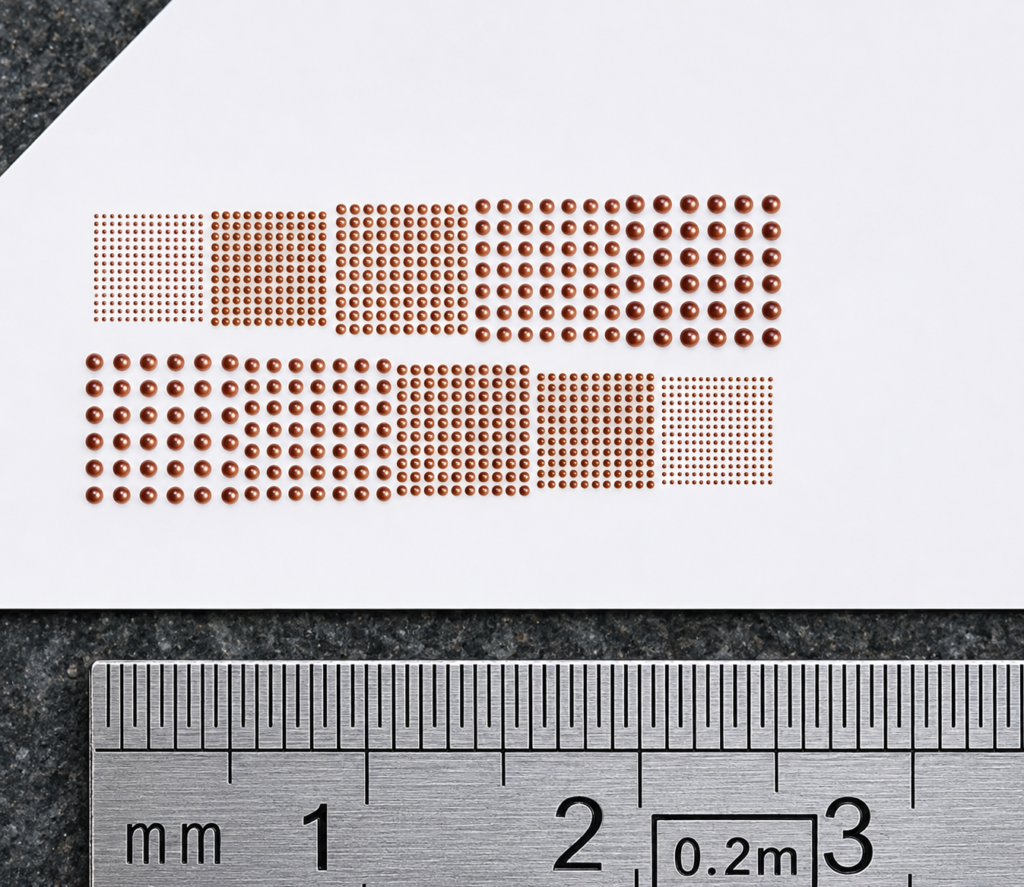
Ceramic substrates play a key role in the manufacture of high-performance electronic components, particularly in the aerospace and telecommunications sectors. Thanks to their excellent insulating properties, thermal stability and resistance to demanding environments, they are particularly well-suited as substrates for the production of electronic and microwave components.
Combining ceramics with conductive metals allows the complementary properties of these two materials to be utilised. LiCS Coating® provides electrical and thermal conductivity, whilst the ceramic ensures electrical insulation and good resistance to high temperatures.
The metallisation of ceramic substrates thus enables the creation of conductive tracks, interconnections, antennas and electrical circuits designed to carry signals, including high-frequency signals.
The approach developed by AML Innovation: LiCS Coating®
To address these challenges, AML Innovation is exploring a new application of the patented LiCS Coating® process, which enables the deposition of functional metal coatings onto ceramic substrates.
The process is based on the use of a suspension of metal powder in a liquid medium. This formulation allows the material to be deposited onto specific surfaces, whilst controlling the geometry and thickness of the coating.
As part of this work on metallisation of ceramics, two complementary stages are carried out:
- Deposition of the metal suspension
The first stage involves depositing the suspension loaded with conductive metals onto the ceramic substrate using various techniques.
This method enables the creation of precise conductive patterns, allows for control over their geometry, and facilitates the reproduction of metal tracks with narrow spacing. - Vacuum heat treatment
Following deposition, the samples undergo a high-temperature vacuum heat treatment cycle. This treatment consolidates the metal layer and develops an interface between the deposit and the substrate.
Mastering this stage is essential for achieving uniform metallisation with good adhesion and long-term durability against the thermal and mechanical stresses encountered in service.
Promising initial results for high-frequency applications
Initial trials carried out by AML Innovation demonstrate the potential of this approach for producing fine, precise conductive tracks on ceramic substrates.
The samples produced exhibit several interesting characteristics:
- Deposition thickness: between 40 and 200 µm, with the thickness adaptable to suit requirements.
- Electrical conductivity: 20 MS/m measured at 35 GHz.
- Geometric precision: 250 µm spacing between tracks on the samples presented.
- Repeatability: a well-controlled process enabling the reproduction of metal patterns with a high degree of consistency.
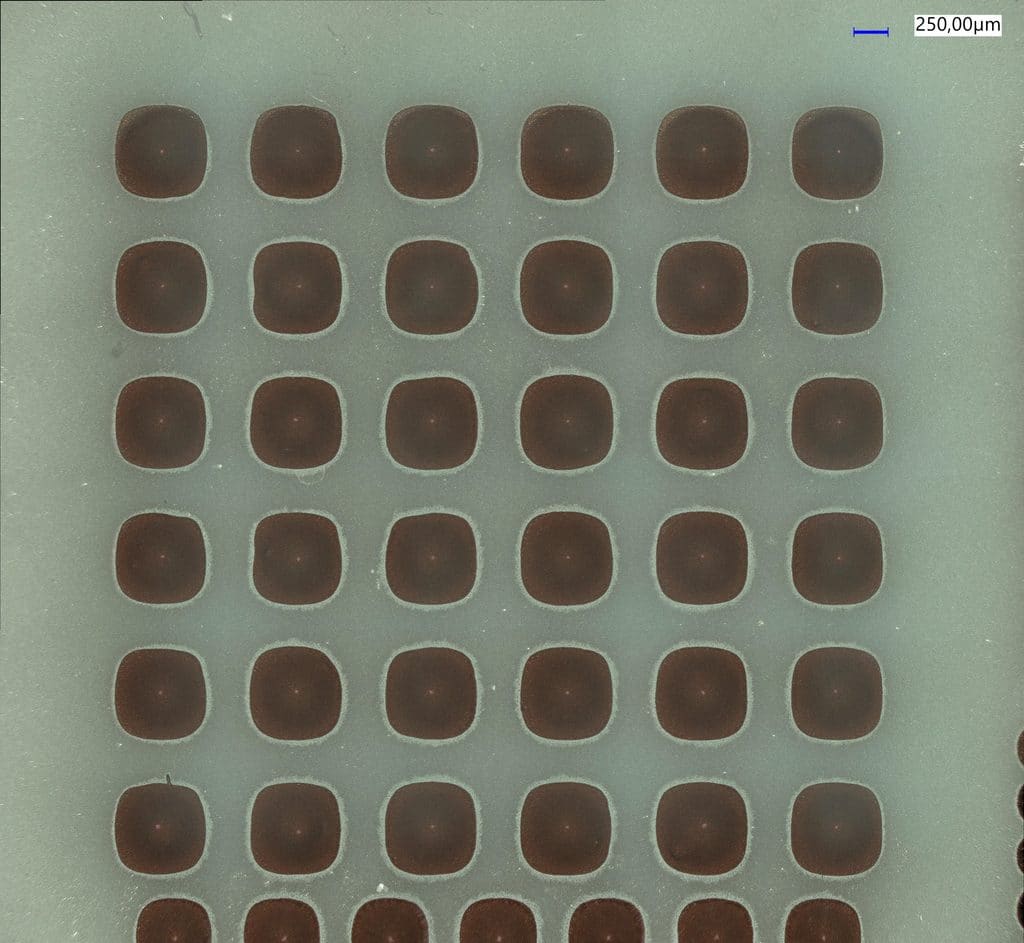
The conductivity measurement at 35 GHz is of particular interest for microwave applications. At these frequencies, the electrical characteristics of the materials and the geometry of the tracks play a decisive role in the performance of the components.
These initial results thus demonstrate LiCS Coating®’s ability to produce functional metallisation on ceramics, with precise control over the thickness and geometry of the deposits.
New prospects for electronic and microwave components
The metallisation of conductive materials on ceramics opens up new possibilities for a range of industrial applications requiring high electrical and thermal performance.
The relevant sectors include, in particular:
- Aerospace: the manufacture of microwave circuits, antennas and on-board electronic components.
- Telecommunications: the manufacture of conductive tracks and interconnections for RF systems and communications equipment.
- Power electronics: the development of metallised ceramic substrates for components requiring effective heat dissipation.
- Aerospace and defence: the integration of compact electronic solutions capable of operating in demanding environments.
Through this work, AML Innovation is continuing to develop new applications for LiCS Coating®, exploring the possibilities offered by the metallisation of technical materials and substrates with specific properties.
About AML Innovation
AML Innovation is an industrial platform specializing in multi-material brazing technologies and the post-processing of high-performance parts using an innovative coating: LiCS Coating®. A subsidiary of the AML Microtechnique Lorraine Group, AML Innovation develops and industrializes high-value-added solutions for the most demanding applications in the aerospace, defense, luxury, and high-tech industries. From feasibility studies to qualification, we support projects from development through mass production.
link for AML Microtechnique Lorraine : https://aml-microtechnique.com